The Railroad Moment
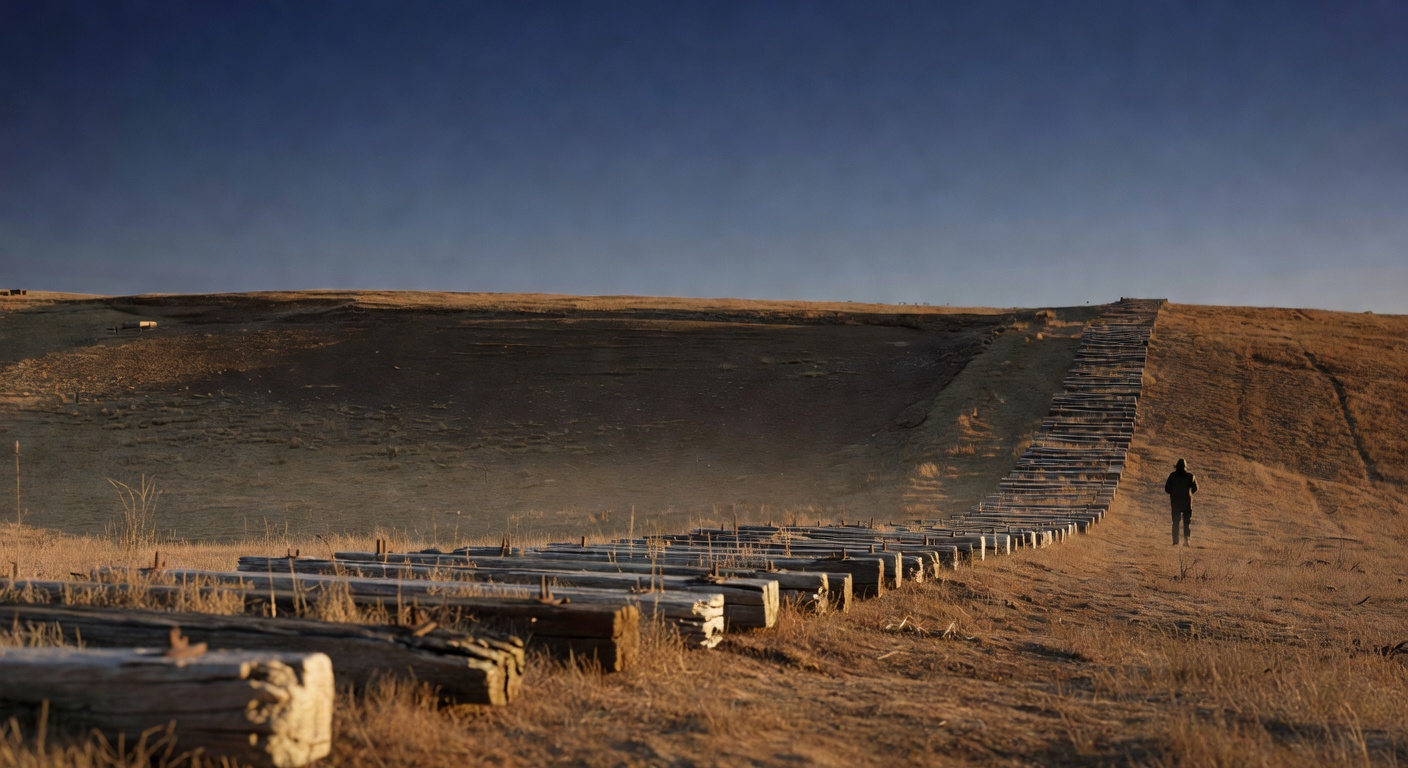
Before the Rails
In 1800, moving goods across America took months. A ton of freight from Philadelphia to Pittsburgh cost as much as shipping it across the Atlantic. Rivers helped where they existed. Roads were mud. Pack horses carried what they could.
The technology to change this already existed — in pieces. Iron forging had been advancing for centuries. The steam engine had been pumping water out of coal mines since the early 1700s. Both were useful. Neither was transformative.
Then someone put a steam engine on iron rails.
Within fifty years, a continent was connected. Industries that couldn’t exist before — meatpacking in Chicago, steel in Pittsburgh, grain markets in Kansas City — suddenly could. Not because the raw materials appeared. They’d always been there. But because the infrastructure to move value between them finally existed.
The railroad didn’t create the goods. It created the connections that made the goods matter.
Two Technologies, One Transformation
The important thing about the railroad isn’t the steam engine or the iron rails. It’s the pairing.
Steam without rails is a stationary pump. Useful in one place, for one job. Rails without steam are a horse path with less friction. Marginally better. Neither alone reorganizes an economy.
The pairing created something qualitatively different. Not “faster horses” but an entirely new economic topology. Towns that existed because of rivers were suddenly competing with towns that existed because of rail junctions. Industries that depended on local resources could suddenly access national markets. Specialization became viable because distribution became cheap.
The transformation wasn’t additive. It was multiplicative. Steam multiplied by rails didn’t equal “slightly better transport.” It equaled a new civilization.
We’re Watching the Same Pairing
AI is the steam engine of our moment. It’s powerful, fast, and getting cheaper by the month. It can process, decide, create, analyze, and automate at scales that were fantasy five years ago. Companies are deploying it everywhere — customer service, code generation, content creation, drug discovery, financial analysis.
But AI alone has a problem that sounds familiar: it’s powerful energy with no rails to run on.
An AI agent can draft your contracts — but who verifies the AI was authorized to act on your behalf? It can process insurance claims — but what credential proves the claimant’s identity? It can match buyers and sellers — but what stops it from fabricating reputation? It can manage your finances — but what auditable trail proves it only did what you allowed?
AI without accountability infrastructure is a steam engine bolted to the floor. Impressive. Contained. Limited to one room.
KERI is the rail network.
What KERI Provides That AI Cannot
AI is intelligence. KERI is accountability.
| AI Provides | KERI Provides |
|---|---|
| Speed and scale | Identity and proof |
| Pattern recognition | Credential verification |
| Decision-making | Delegation boundaries |
| Content generation | Provenance and attribution |
| Automation | Revocable authority |
| Prediction | Auditable history |
Neither column is sufficient alone. An AI with no identity infrastructure is an anonymous actor you can’t hold accountable. Identity infrastructure with no AI is a filing cabinet — organized but inert.
Paired, they become something else entirely. AI agents that can act with verifiable authority. Credentials that can be issued, verified, and revoked at machine speed. Marketplaces where reputation is earned through attested delivery and AI handles the matching, coordination, and optimization.
The delegated AI model makes this concrete: an AI agent holds a delegated identifier with cryptographically scoped authority. It can act within its delegation — sign requests, issue attestations, coordinate with other agents — but it cannot exceed its scope. The delegation is revocable. The audit trail is immutable. The authority is verifiable by any party.
This isn’t AI with a permission system bolted on. It’s AI that is architecturally accountable. The way a train is architecturally constrained to its rails — not because someone told it to stay on track, but because the infrastructure makes derailment structurally difficult.
The Economies That Become Possible
When the railroad connected the American continent, nobody sat down and listed all the industries it would create. Meatpacking, mail-order retail, commuter suburbs, national newspapers, tourism — these emerged because the infrastructure existed, not because someone planned them.
We’re at the same stage with KERI + AI. But we can already see the outlines of economies that become possible when verifiable identity meets machine intelligence.
Community Service at Scale
The community service marketplace we’ve designed pairs AI matching with KERI credentials. An AI agent can match a retired carpenter who posted an offer to help with a single mother who needs her porch repaired — considering location, schedule, skills, and reputation. The OADA pattern (Offer, Accept, Disclose, Attest) handles the trust. The AI handles the coordination.
Without KERI, the AI is just another platform — matching people but owning the relationships. With KERI, the participants own their credentials, their reputation, and their data. The AI is a service, not a landlord.
Trades Without Middlemen
The small trades cooperative puts verifiable trade licenses, insurance, and safety certifications in the hands of independent workers. AI can handle job sequencing, permit coordination, and code compliance checking — work that currently justifies the general contractor’s 40-60% cut.
The pairing matters: AI provides the coordination intelligence. KERI provides the trust infrastructure that makes the coordination legitimate. An AI scheduling a plumber after an electrician is useful. An AI that can verify both workers’ licenses, confirm their insurance, and generate an auditable compliance record is transformative.
Genealogy Without Gatekeepers
The genealogy ecosystem decomposes Ancestry’s monopoly into competitive marketplaces. AI is extraordinary at the pattern matching that drives genealogical research — finding connections across millions of records, suggesting linkages, identifying conflicts. But today that AI is locked inside one company’s platform.
With KERI credentials on the records themselves — provenance attestations, digitization certificates, research endorsements — AI matching services can operate over an open record ecosystem. Multiple algorithms compete. Researchers choose. Records stay with their holders. AI provides the intelligence. KERI provides the trust that the intelligence is operating on authentic, attested records.
The Actual Value Economy
The actual value economy strips away intermediaries that extract value without adding it. AI + KERI accelerates this dramatically. AI can automate the coordination work that intermediaries currently charge for — matching, scheduling, compliance, dispute evidence gathering. KERI ensures the automation is accountable and the participants retain ownership of their identity, reputation, and data.
The intermediary’s traditional defense — “you need us to manage trust” — dissolves when trust is cryptographic and coordination is automated.
The Flourishing Pattern
The railroad didn’t just make existing industries faster. It created new categories of economic activity that were literally impossible before.
The same pattern is emerging with KERI + AI:
Before the pairing: If you want to verify someone’s credentials, you call their licensing board during business hours, wait on hold, and get a verbal confirmation. Background checks take days. Reputation lives on platforms you can’t leave.
After the pairing: An AI agent verifies credentials in milliseconds against a KERI-backed credential chain. Reputation is portable, attested, and machine-readable. Background checks are continuous and consent-based, not periodic and invasive.
Before the pairing: If you want to coordinate a community project — disaster relief, neighborhood improvement, mutual aid — you need a central organizer who burns out.
After the pairing: AI handles the matching, scheduling, and logistics. KERI credentials verify who people are, what they can do, and whether they delivered. No central coordinator needed. The community service marketplace runs itself.
Before the pairing: If you’re an independent tradesperson, you need a general contractor to find you work because customers can’t verify your credentials efficiently.
After the pairing: Your credentials are verifiable by anyone. AI matches you directly with customers. The general contractor’s coordination role is automated. You keep the full value of your labor.
These aren’t incremental improvements. They’re new economic topologies — the same way rail junctions created cities where no city had reason to exist before.
What the Railroad Teaches Us
The railroad era also teaches us what goes wrong.
The robber barons didn’t build the railroads and then step aside. They used control of the infrastructure to extract monopoly rents. They set rates that crushed competitors. They built company towns. They turned the rails from public good into private tollbooth.
This is exactly what Big Tech has done with the internet. Built the infrastructure, then extracted from everyone who uses it. Rented you access to your own connections. Made you the product.
KERI’s architecture is specifically designed to prevent this. No one controls the identifier space. No one owns the credential format. No one can lock you into a witness pool or an agent service. Your Key Event Log is yours — take it and go whenever you want. The protocol is open. The infrastructure is forkable. The rails belong to everyone.
The steam engine is here. The iron is forged. The question isn’t whether the pairing happens — it’s whether the rails are public infrastructure or private tollbooths.
We’re building public rails.
Where We Are
The ecosystem designs exist. We’ve published architectures for community service, skilled trades, and genealogy — and more are coming as we design them out. Each one is a worked example of what KERI + AI economies look like in a specific industry.
The AI half is moving fast — everyone can see that. The identity half is what’s missing. Not because the technology doesn’t exist, but because most people haven’t realized yet that AI without accountable identity infrastructure is a steam engine without rails.
It pumps. It doesn’t travel.
The pairing changes everything.
| Related: The Actual Value Economy | KERI + AI Security Framework | Buy Your AI. Don’t Rent It. | Unbundling the Monopoly | “Why Do I Need the Internet?” — 1990 |




Comments